SmartAID
SmartAID is an international humanitarian organisation dedicated to bringing the right technology to disaster areas. SmartAID faced a critical challenge: the broader public struggled to grasp the organisation’s tech-driven humanitarian mission. For many, technology still feels like a luxury rather than a life-saving tool — making it harder for donors and partners to understand why it matters in crisis response.
Our goal was to clarify SmartAID’s unique value and expand support in the United States by crafting a brand narrative and web experience that could resonate with a wider, non-technical audience.
My role: In this project, working within Matteo Grand’s strategic design consultancy, I led the core research and design work. While Matteo set the creative direction and managed the project, I drove the user research, developed the tone of voice, and articulated the organisation’s values. I also shaped the information architecture and sitemap, led the wireframing process, presented key design milestones to the client, incorporated feedback, and executed the full website redesign in Figma.
Phase 1: Research & Strategic Foundations
I single-handedly led an extensive research phase to deeply understand SmartAID’s audience, context, and communication challenges. This included:
Donor interviews: Conducted one-to-one conversations with existing donors to uncover motivations, hesitations, and perceptions of SmartAID’s tech-driven work.
Volunteer survey: Designed and analysed a survey for SmartAID’s key volunteers to understand internal perspectives and pain points.
Co-founder interviews: Spoke directly with the co-founders to clarify mission, values, operational realities, and ambitions.
Comparative NGO research: Reviewed peer organisations and benchmarked best-in-class NGO websites, messaging, and donation journeys to identify positioning opportunities.
Sectoral landscape review: Analysed reports, data, and behavioural insights on U.S. volunteering and giving patterns.
User personas: Developed clear personas representing donors, partners, and volunteers, focused on motivations, expectations, and communication needs as well as jobs to be done.
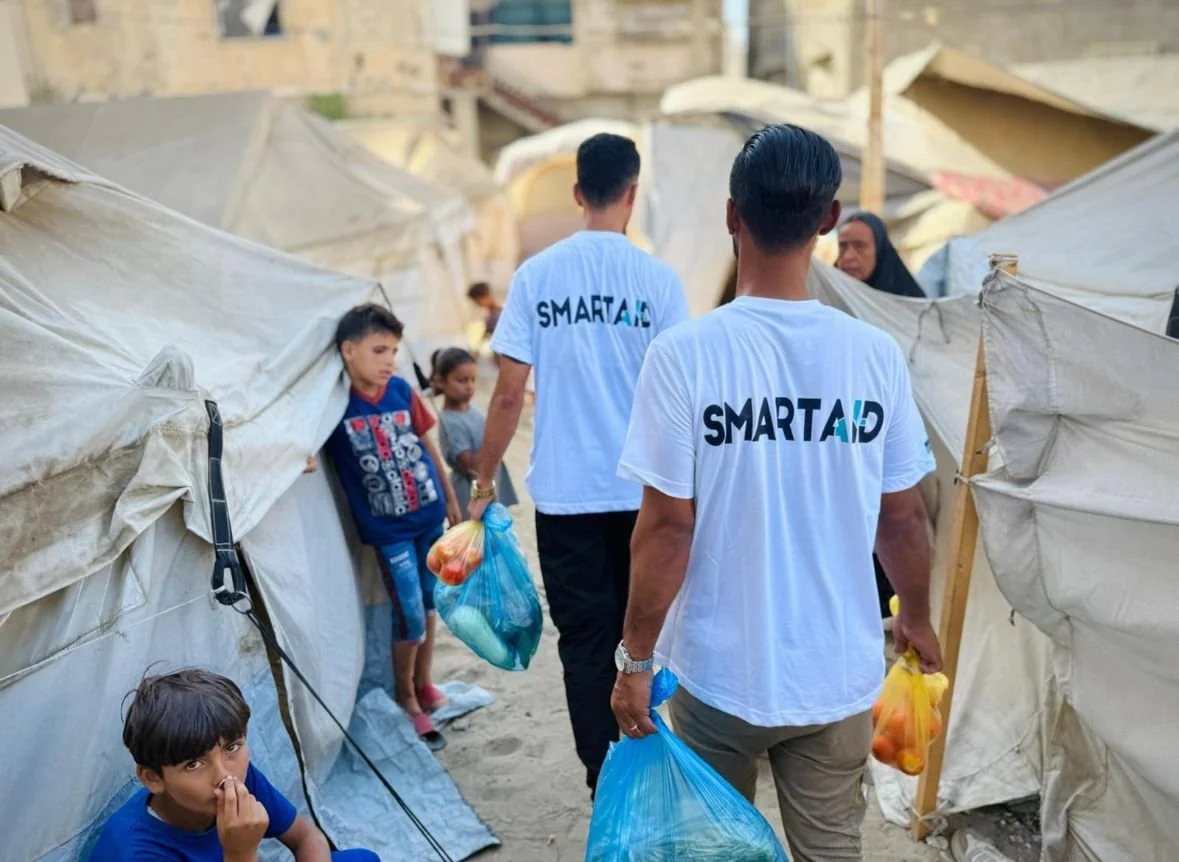
Phase Two: Narrative, Visual Direction & Experience Design
Tone of voice: Defined a clear, empathetic, and trustworthy tone, with guidelines for language, storytelling, and sensitive communication.
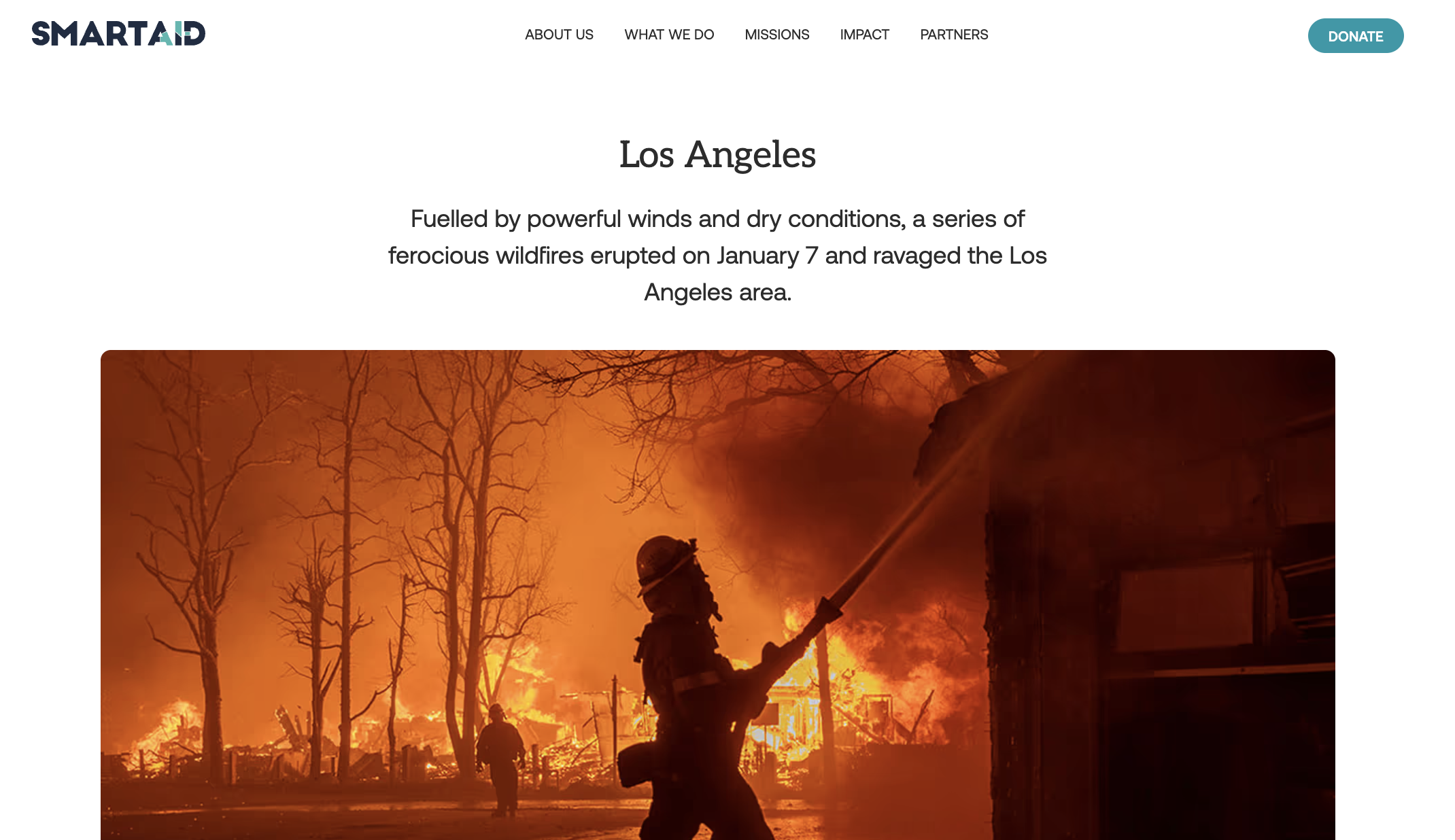
Visual direction: Under Matteo’s guidance, settled on a new typography, refreshed the colour palette, and set guidelines for photography that balanced dignity and power — all while keeping the existing logo for budget and founder-led reasons.
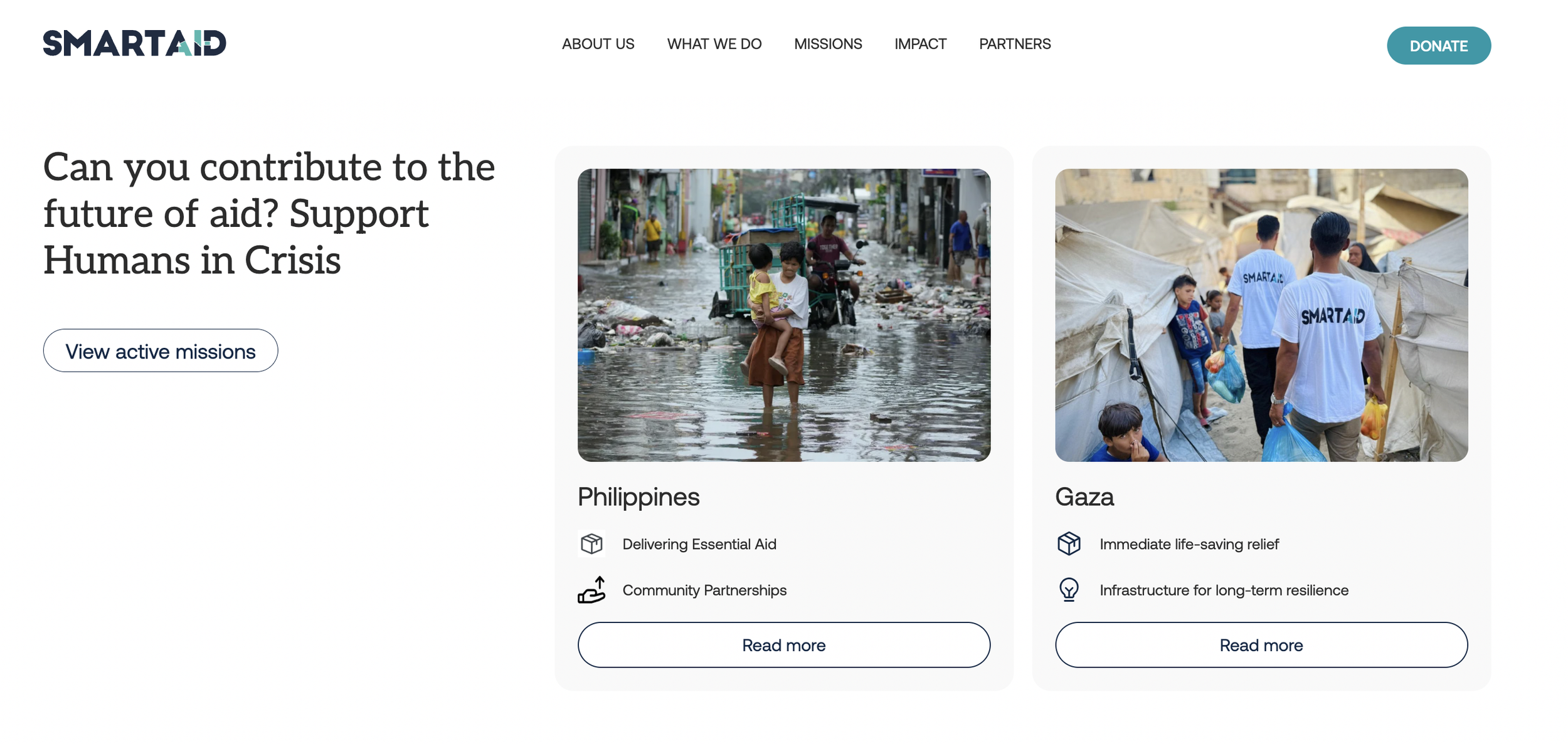
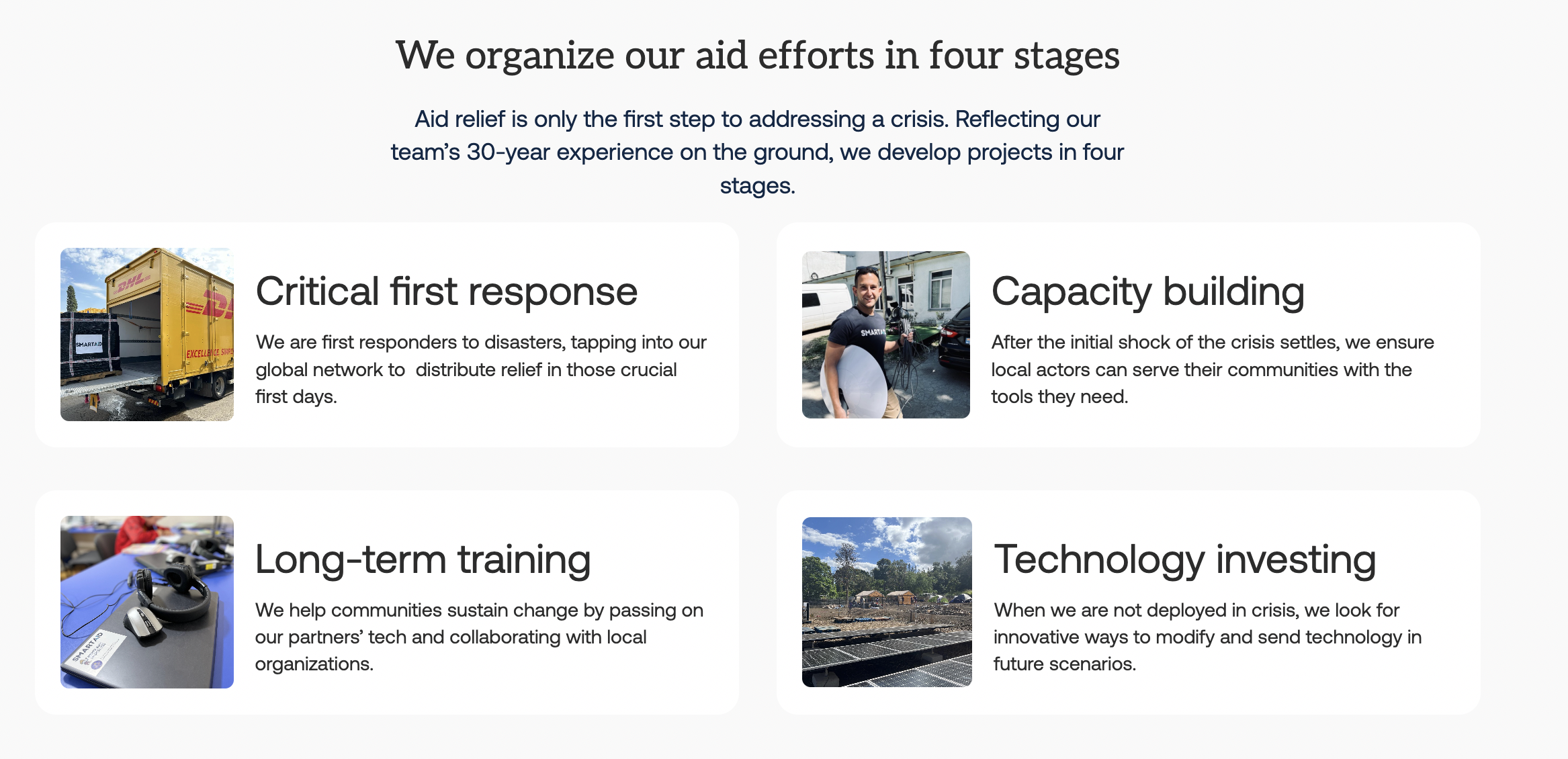
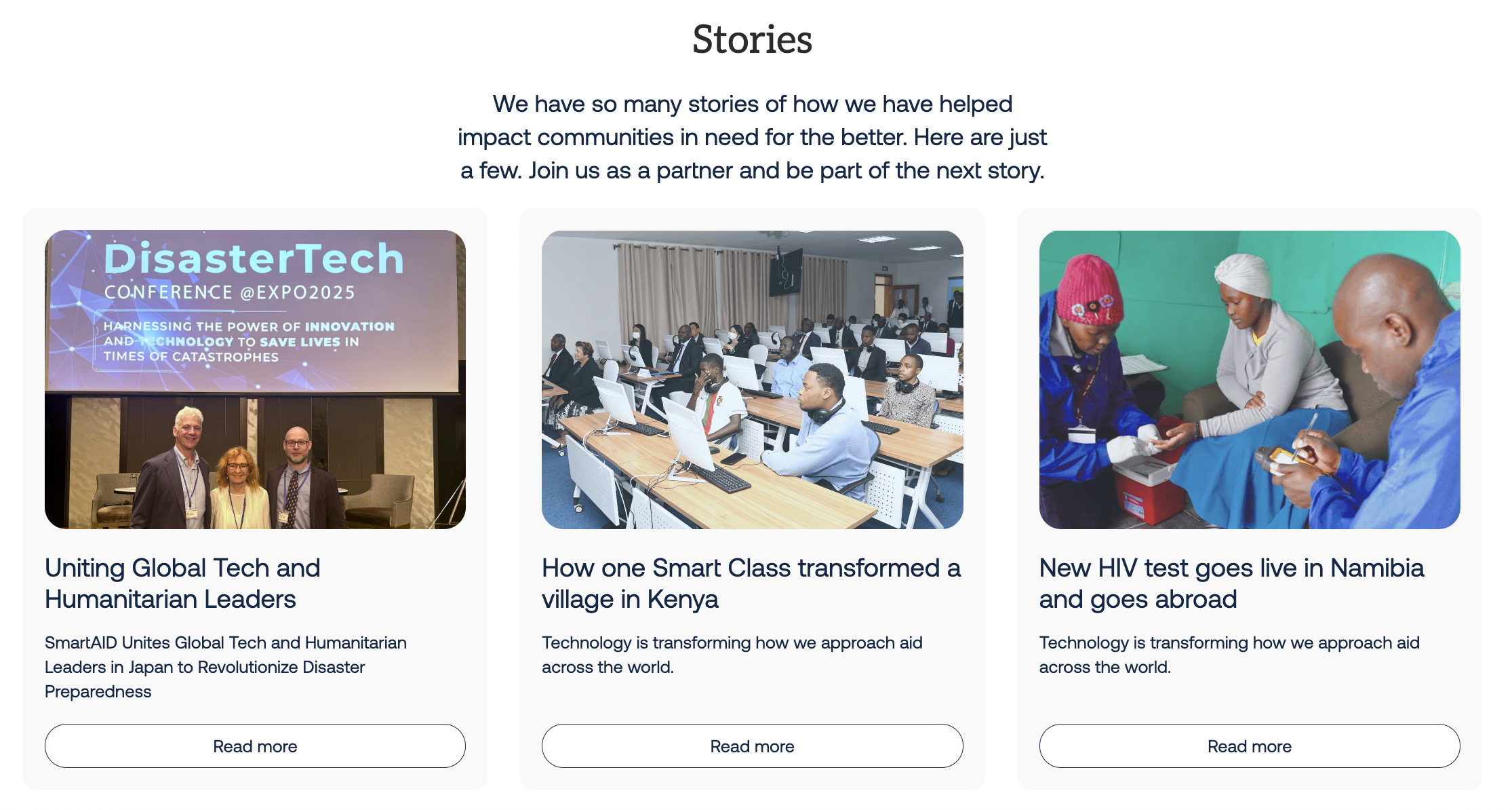
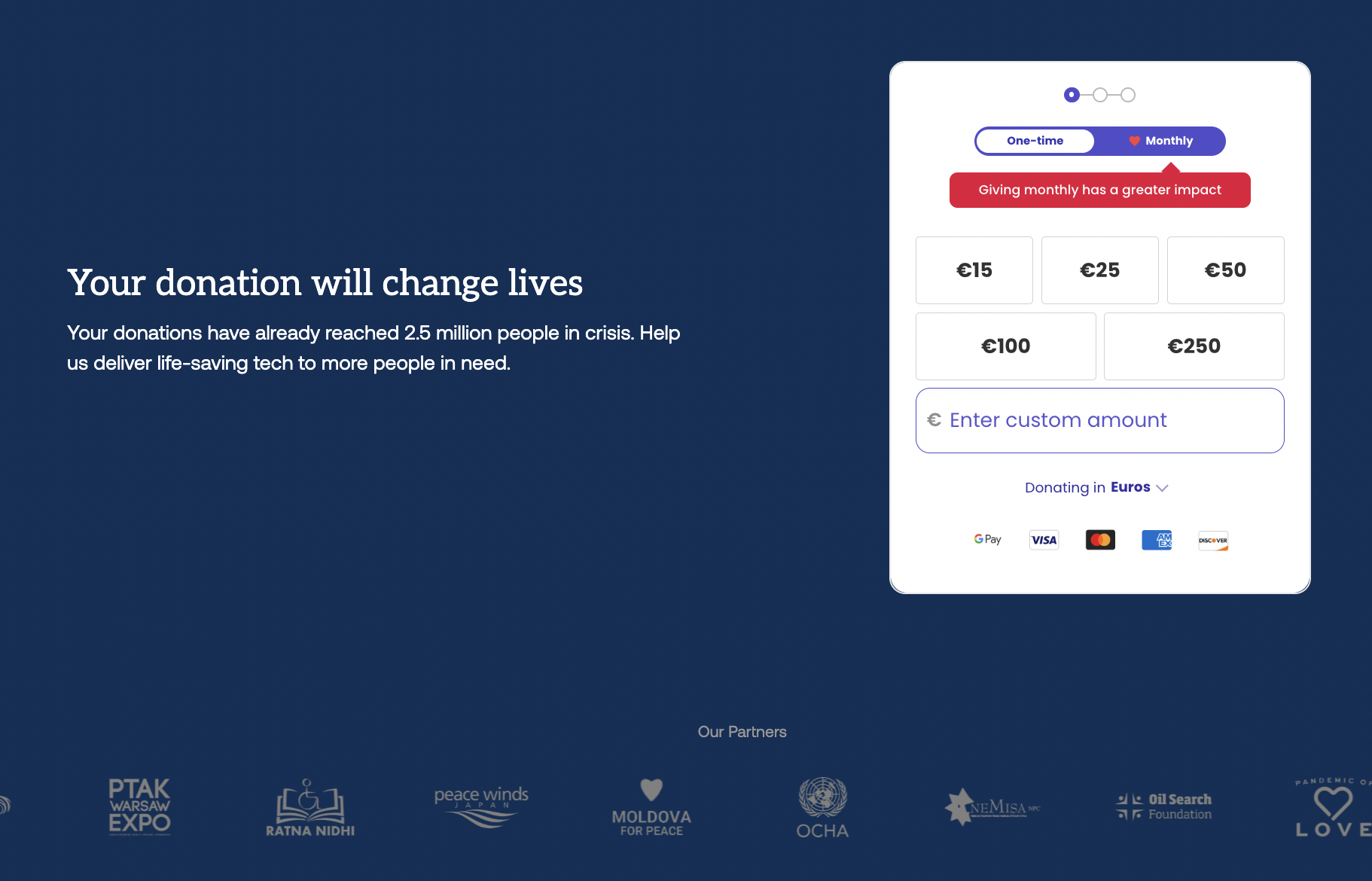
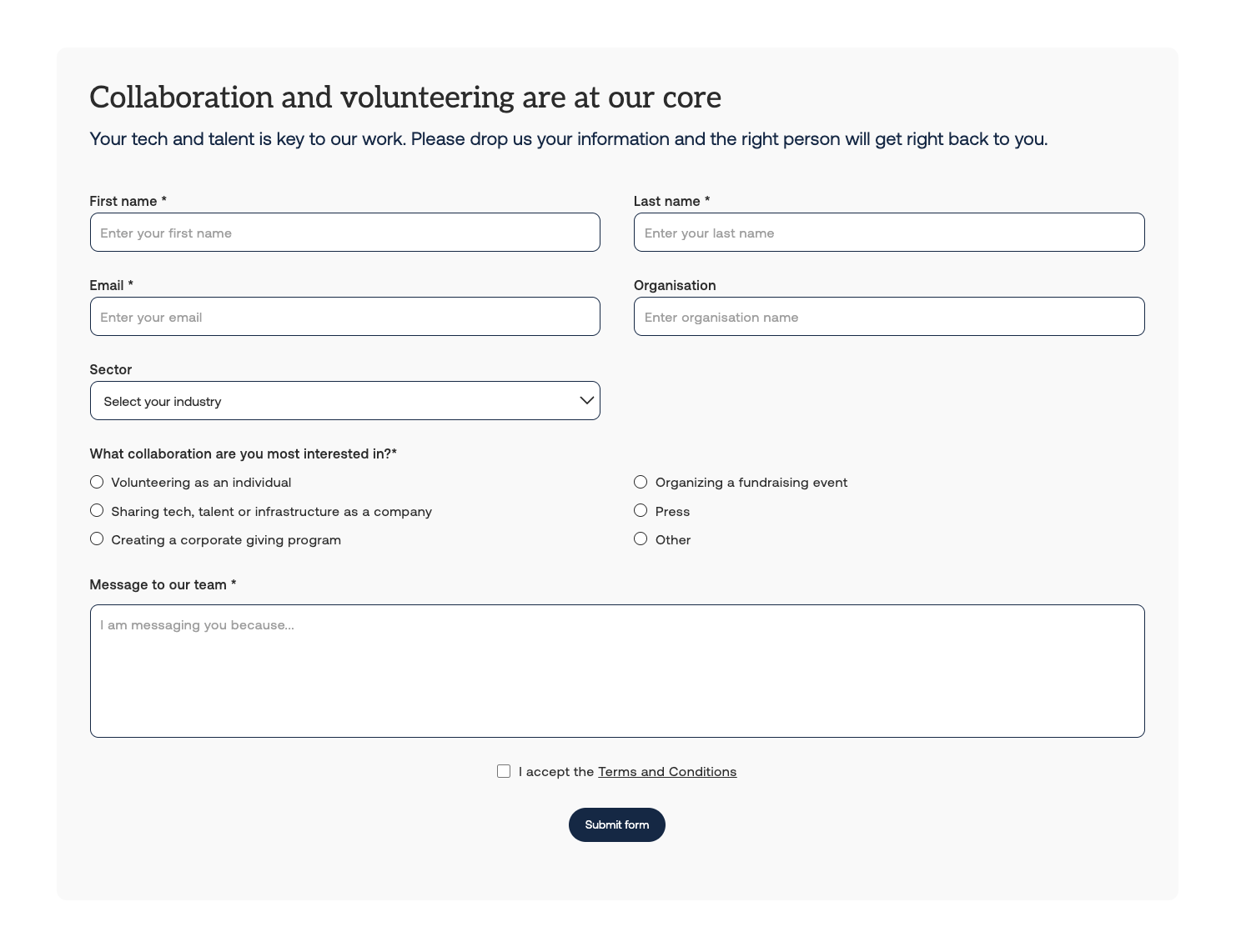
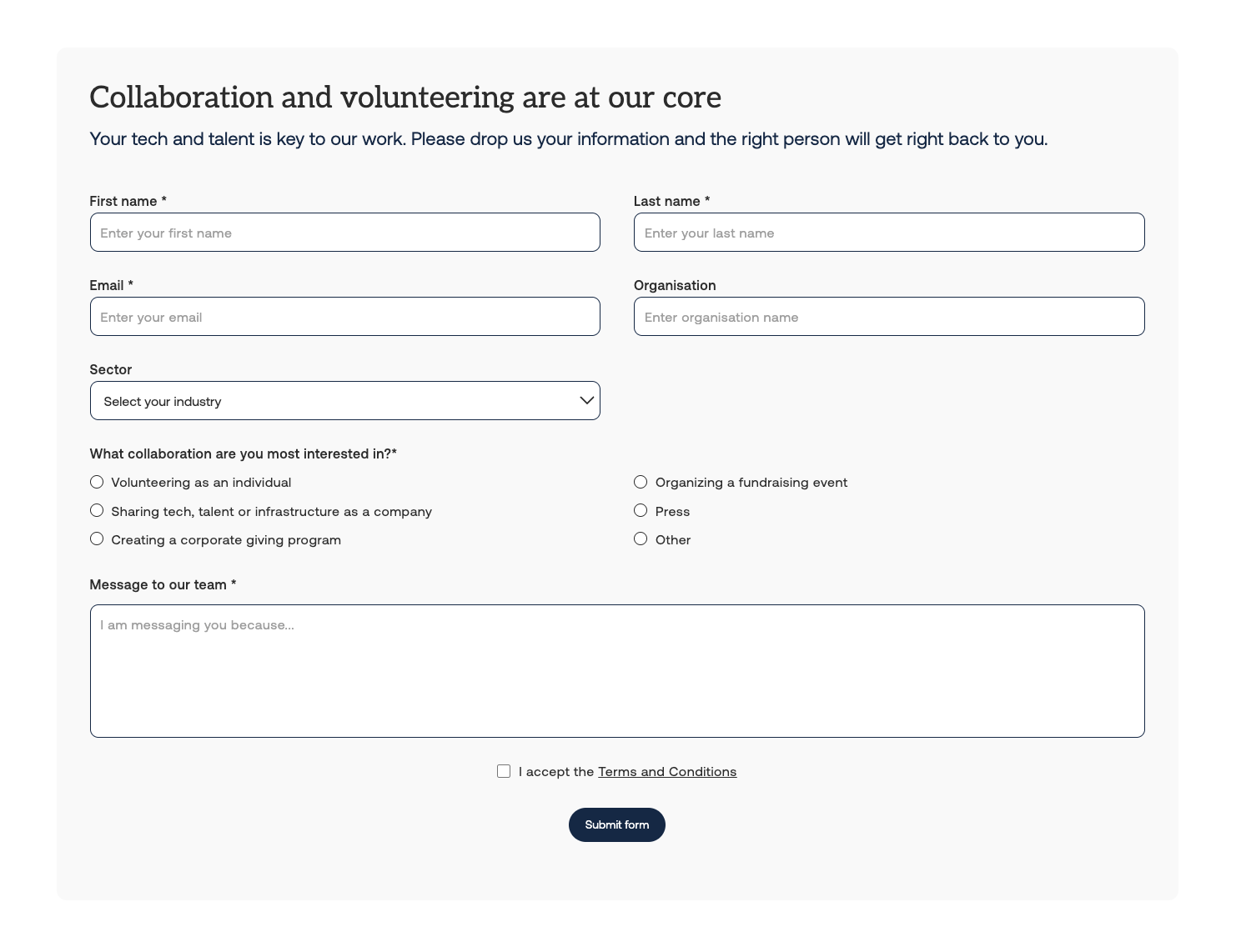
Wireframing & structure: Led a full rethink of the site structure, created new sections such as a donation module, and designed and presented wireframes that clarified narrative flow and improved usability throughout.
Information architecture: Audited the existing navigation and rebuilt the IA and sitemap to guide users more intuitively from understanding SmartAID’s mission to taking action.

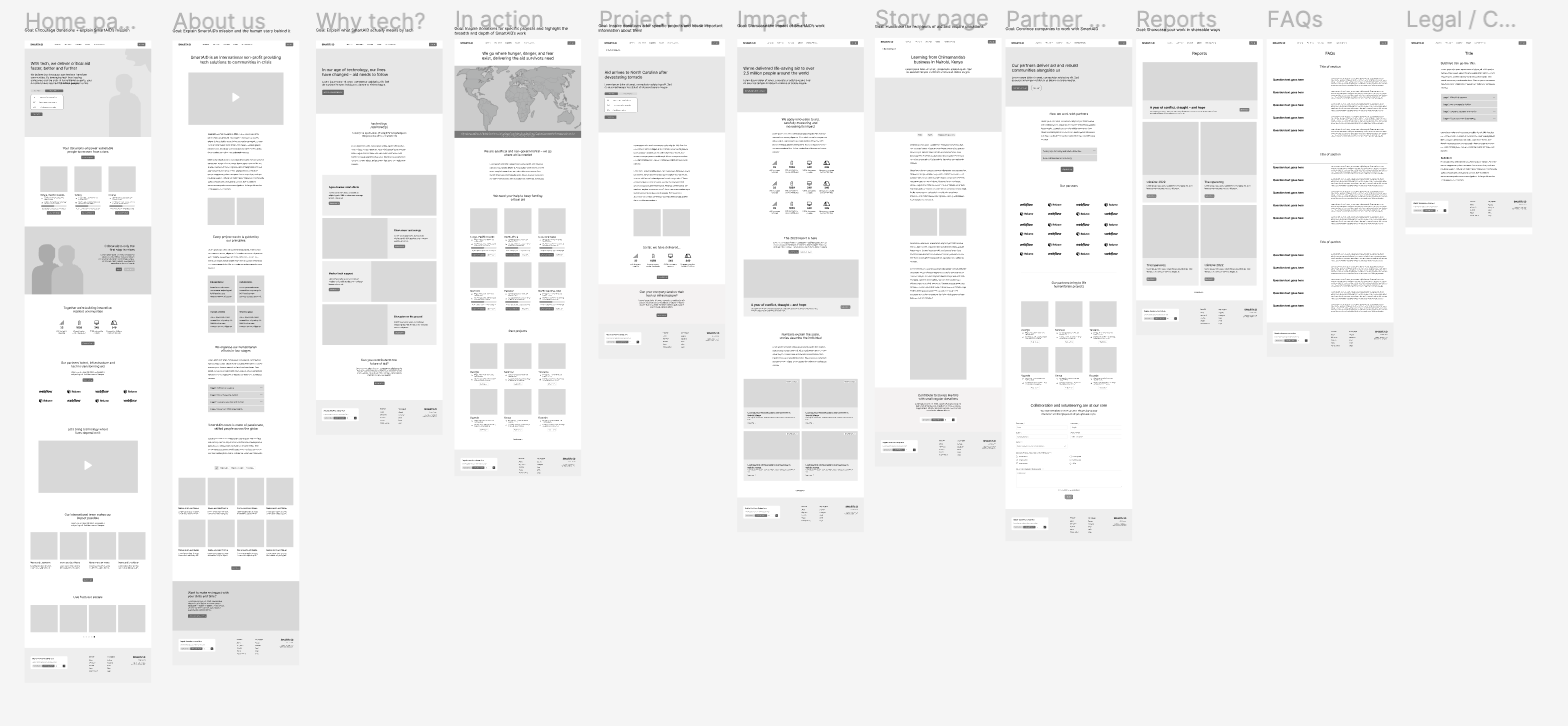
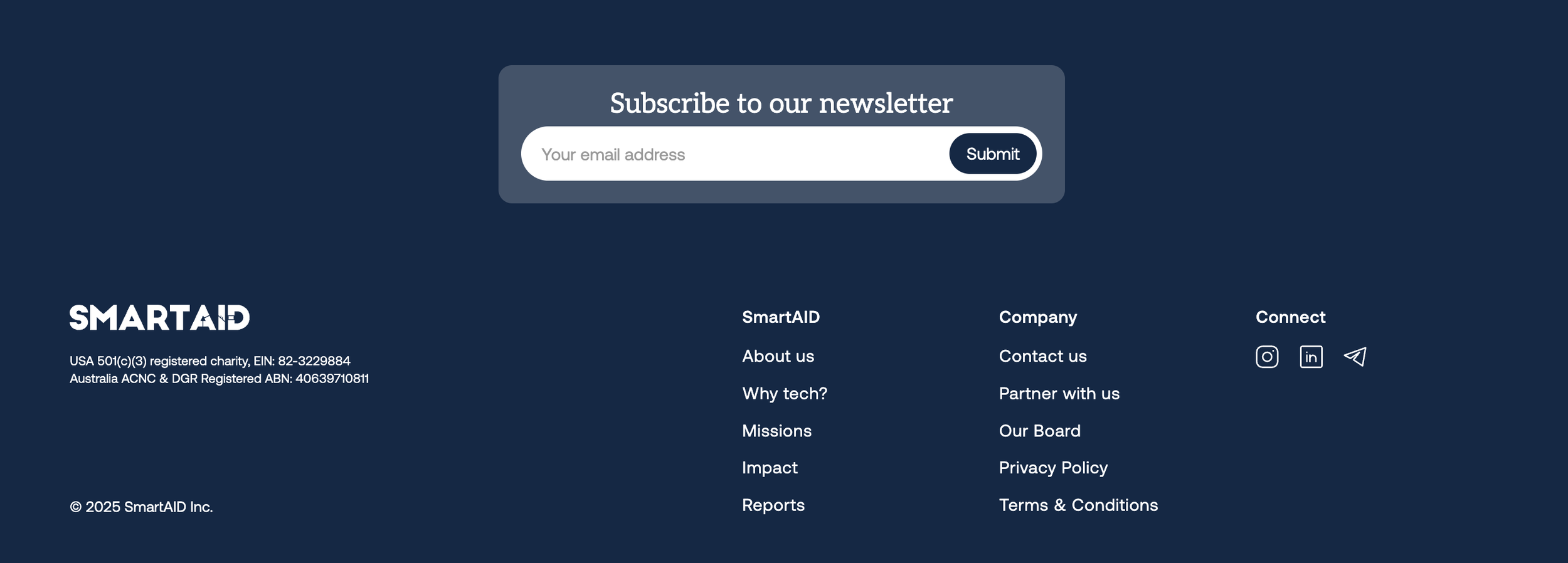
End-to-end Figma design: Led the complete visual and UX redesign of the SmartAID website in Figma, translating the new narrative, tone, and structure into a coherent digital experience.
Collaborative review: Presented design rounds to my manager, Matteo Grand, and to the SmartAID founders, integrating their feedback into refined iterations.
Direction & ownership: Owned the full redesign process while working under Matteo Grand’s creative direction, ensuring the final outcome aligned with both strategic goals and organisational vision.
Phase 3: Full Website Redesign
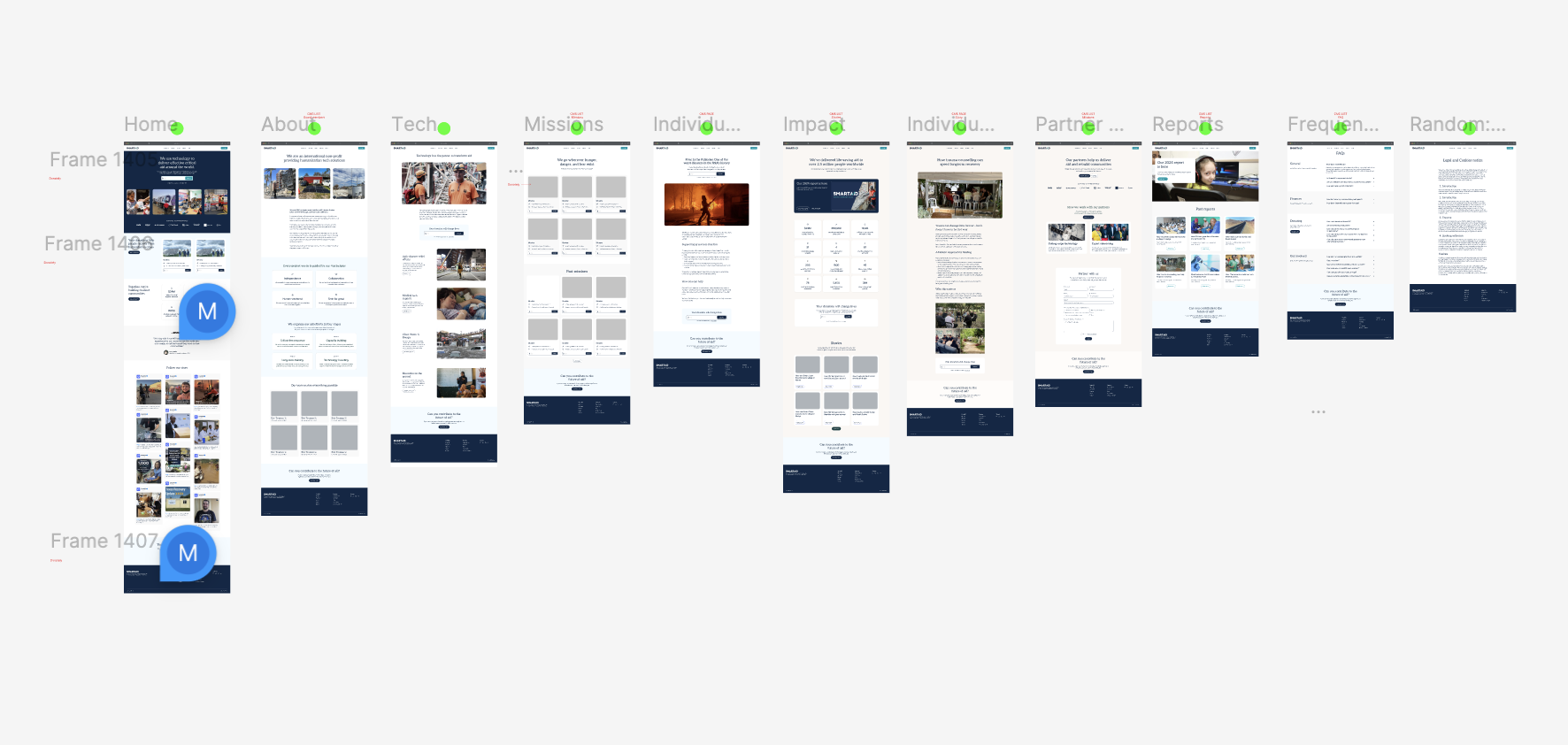
The published website